Adding Warmth with a Living Room Refresh
When we moved into our current house three years ago, the living room was one room I didn’t buy anything new for. I moved in the furniture from our old living room, hung the art, rolled out the rug, and called it good.
Having previously worked at a home decor store, I had some really lovely pieces that I genuinely like. But as the rest of the house came together, the living room started to feel cold and uninviting.
When even Russell mentioned it, I took that as all the permission I needed to redecorate!
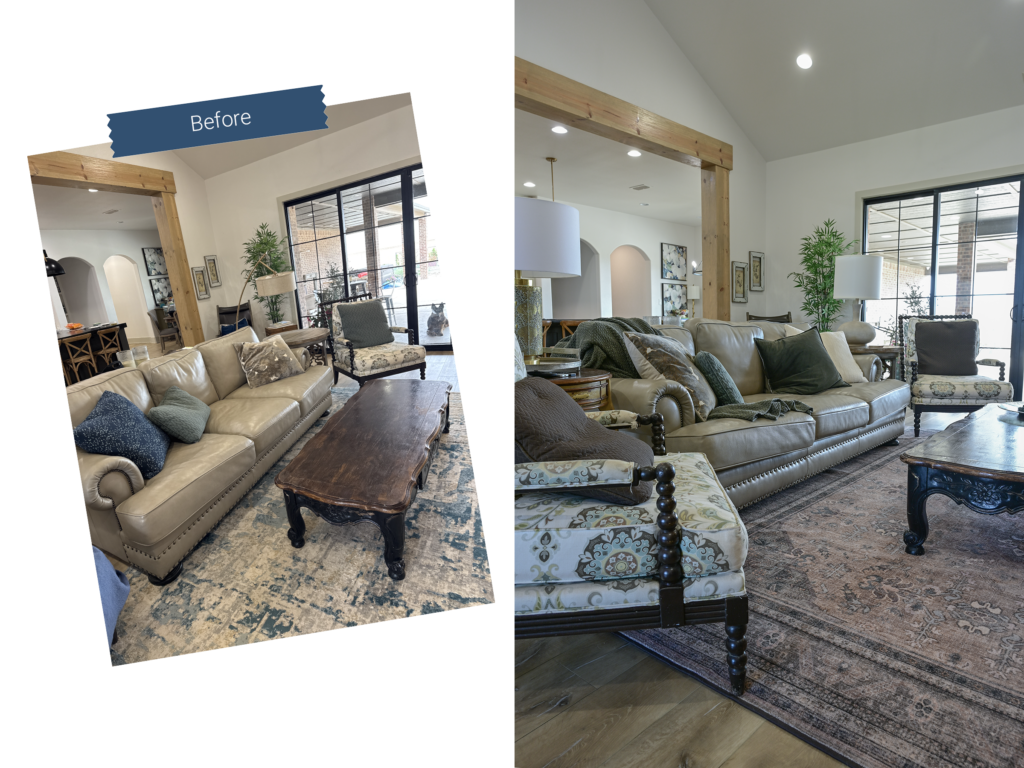
The previous decor was selected for our old house, which was possibly the tan-est house ever built. Tan tile, natural cabinets, warm finishes everywhere – and very little contrast. I’d balanced all of that warmth with blues and grays.
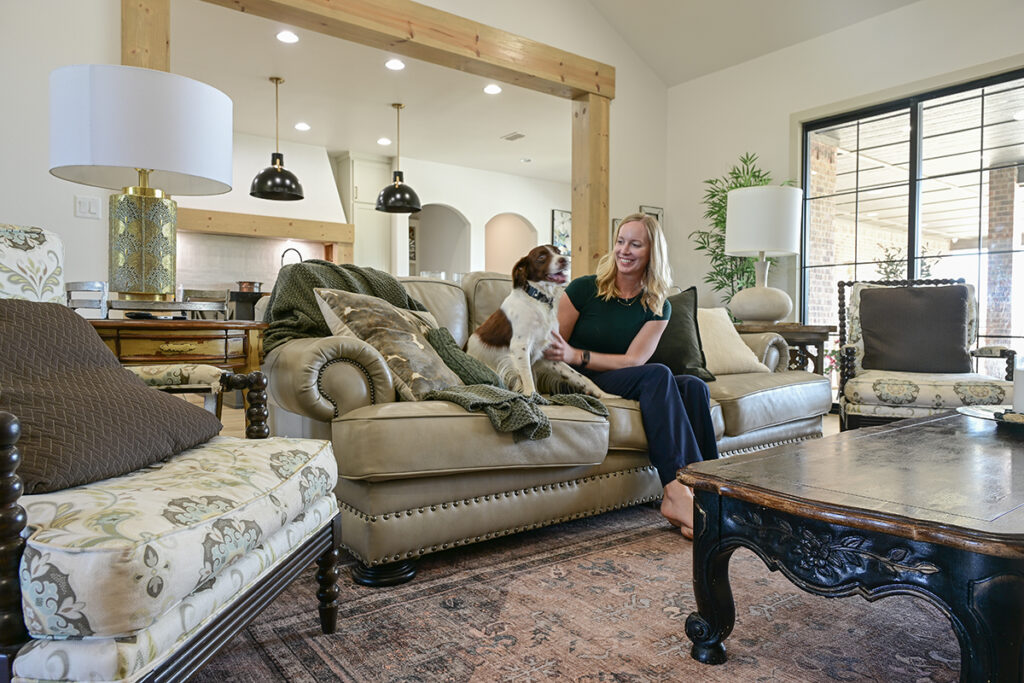
In our current house, the context is completely different. Our palette here is built around white, creams, rich greens, and soft charcoal, with warm woods and aged metals. There is much more contrast, with cooler or neutral tones. So, the cool colors in my decor that had balanced our old house were making this room feel even colder.
I didn’t want to replace a room full of perfectly good furniture to fix it. So, here’s how I decided what stayed, what got replaced, and where to spend my budget.
1. Start With What Isn’t Changing
Before deciding what you want to buy, take stock of what’s staying.
Start with the fixed elements – maybe floors, cabinetry, fireplace, paint and other architectural finishes. Then add the major pieces you like or simply don’t intend to replace. Those things are the parameters you’re designing within.
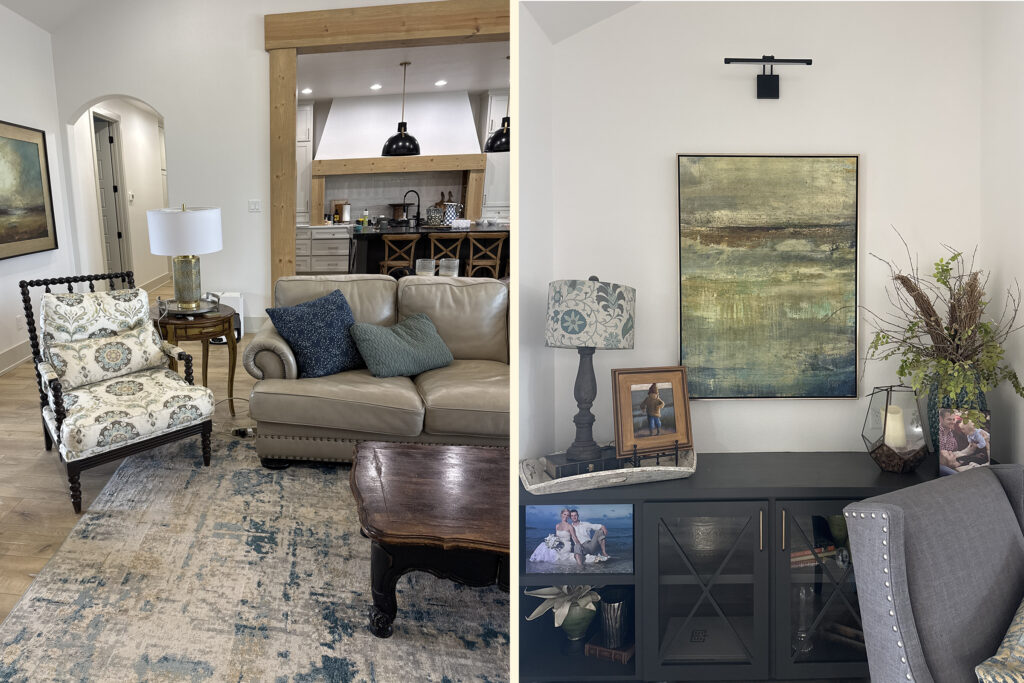
In our living room, the sofa, chairs, coffee table, and side tables were all staying. Fortunately, they also also fairly neutral, which meant I had a lot of room to change the look around them. My patterned chairs were the only thing that really needed me to consciously design around.
2. Consider the Rooms Around It
Unless you’re decorating a completely separate space, don’t choose a room’s direction in isolation. I personally don’t love decor that is matchy-matchy – but I do love coordinated and collected.
I pulled the colors we’d already used throughout our house and looked at the finishes and colors visible from the living room.
Seeing everything together also made the problem with the old palette much more obvious. There was simply too much cool blue competing with the warmer greens, woods and neutrals we’d established elsewhere.
3. Identify What’s Driving the Room
This is where I saved myself a lot of money.
Instead of assuming the room needed to be redone, I looked for the few things having the biggest influence on how it looked and felt.
In this case, three things were doing most of the work from a color perspective: the rug, the art, and the pillows.
The expensive furniture wasn’t the problem.
Try the same exercise before refreshing a room: Which pieces are taking up the most visual space? Which are introducing the strongest colors, patterns or style? A large rug or piece of art may be influencing the room far more than everything else in it combined.
Those are usually the smartest places to start.
4. Know the Direction Before You Shop
I knew I wanted the room warmer, but color wasn’t the only thing I wanted to change.
The old room leaned more transitional. I wanted this one to feel more collected and move further toward the Old World and European influences I’ve been bringing into the rest of our home.
So I established a loose palette — olive and mossy greens, tobacco, muted clay, warm neutrals — but I was also looking for more texture, patina, age and traditional influence.

Having that direction made shopping much easier. Instead of asking Do I like this? I could ask Does this take the room where I want it to go?
There’s a big difference. I like plenty of things that have absolutely no business living together in the same room. Being really clear on the style, colors, and size you need for your space helps you avoid compromises and impulse purchases.
5. Spend Where You’ll See the Biggest Difference
Once I knew what needed to change, I could put most of the budget toward the pieces that would actually move the room.
The rug was the biggest purchase, which made sense because it creates a lot of visual impact. I chose a Ruggable that brought in the warmer, earthier colors and more traditional influence I wanted.
Then I could spend much less on the supporting pieces. The pillows and throw came from Target, the art from Magnolia, and I found a few vases and accessories at a local shop.
Altogether, I spent less than $1,500 on the refresh – and it really feels like a whole new space.
Before
After
Take a Video Tour
Before You Refresh a Room
If you have a room that isn’t quite working, resist the urge to start with a shopping cart.
Look at what has to stay. Consider the spaces around it. Figure out which pieces are having the biggest influence. Decide where you want to go. Then spend your money on the changes that will actually get you there.
Living Room Sources
Rug: Ruggable Rowan Stone & Soft Clay Rug
Art: Magnolia Enchanted Forest Tapestry
Pillows + throw: Target
Vases + accessories: Bought locally, but here’s an online link.