Insanely Easy Flowers to Grow for Summer Bouquets
My garden has a tendency to look like I spend significantly more time working in it than I actually do. I love the overflowing, slightly wild look of a cottage garden. I do not love the idea of spending every free evening babying finicky plants to achieve it.
Over the years, I’ve gotten better at choosing plants that do a lot of the work for me: things that grow easily from seed, thrive without much attention, and come back on their own. And when it comes to cut flowers — bonus points for the ones that make quick arrangements almost effortless.
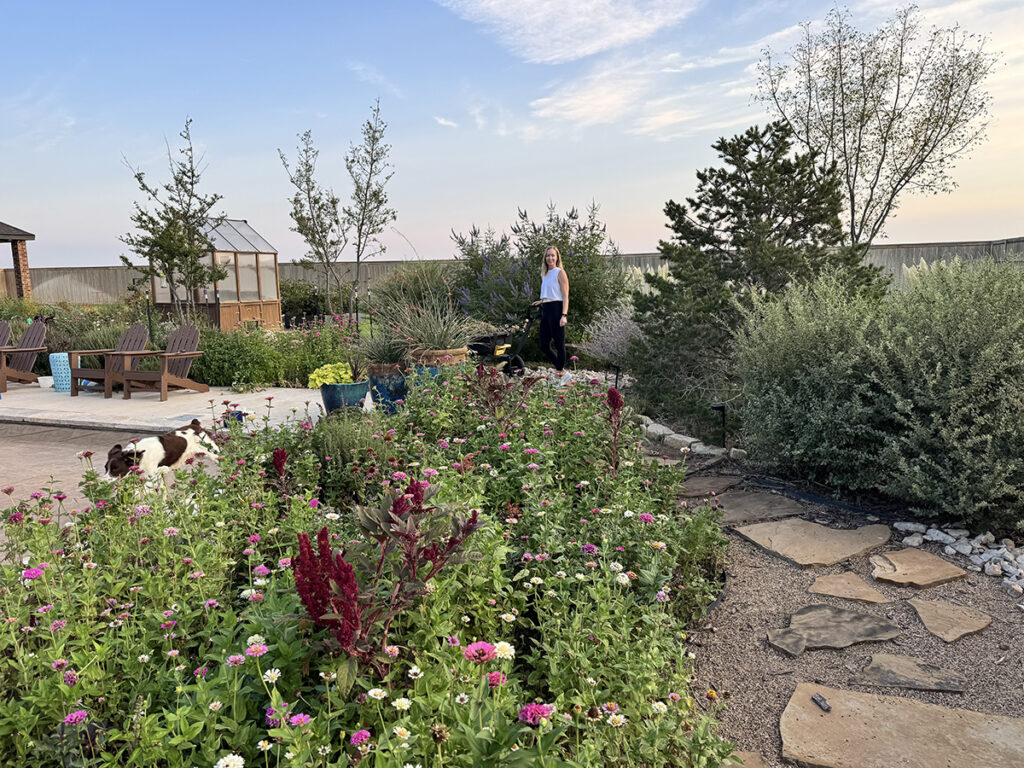
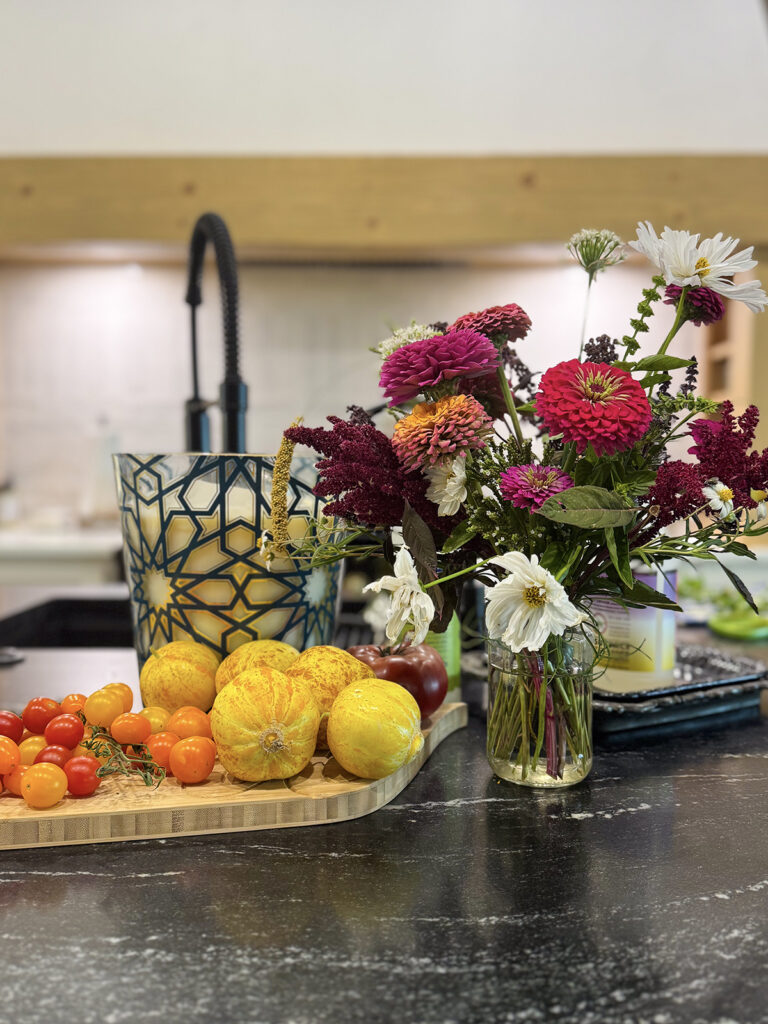
These are some of my favorites to plant. The ones that let me walk outside with a pair of scissors all summer and come back with enough flowers and greenery for a loose bouquet on the kitchen counter. And that’s about all the work they take.
Zinnias
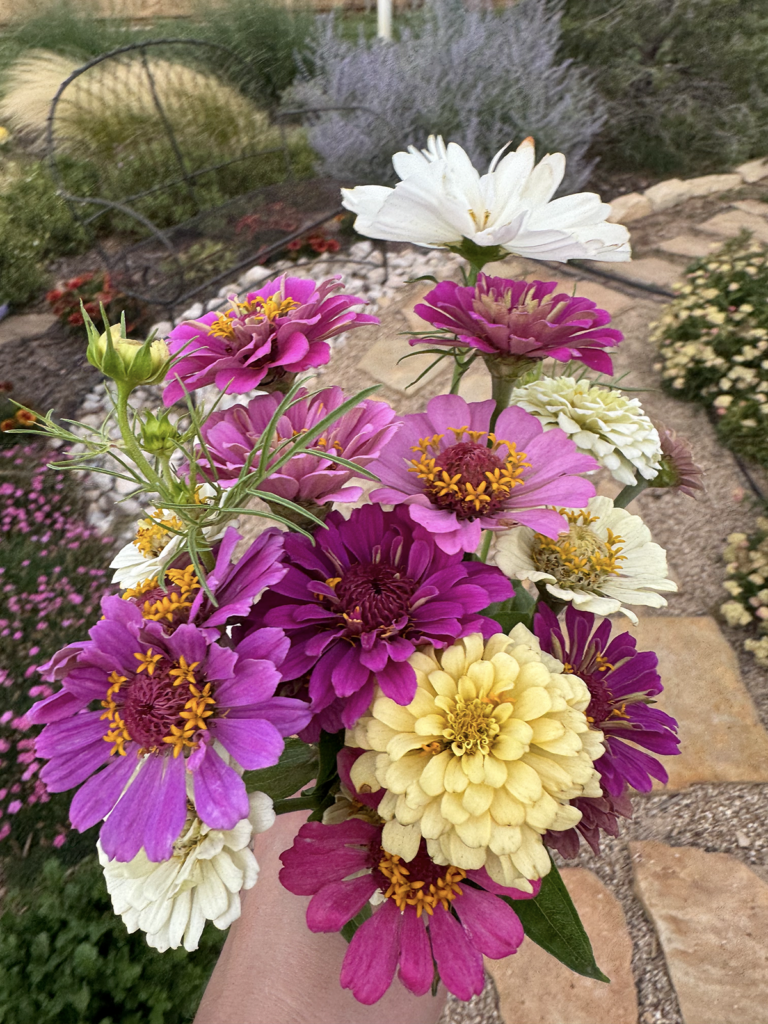
If you want maximum flowers for minimal effort, start here. They grow easily from seed, love the heat, and produce more flowers as you keep cutting them.
They’re also prolific self-seeders, which I love and my husband finds annoying. So, do with that what you will.
Some of my favorite varieties are Zahara Double Raspberry Ripple, Queeny Red Lime, and Oklahoma Ivory. But I think the more typical bright pinks—like Benary’s Giant Lilac or Giant Purple—are the easiest and hardiest to grow.
Sunflowers
There’s not much that screams summer quite like a bright sunflower. I like branching varieties for bouquets because the blooms are a little smaller and each plant provides lots of flowers.
They don’t bloom all summer, so I plant a few rounds throughout the season. Then I let some go to seed—and as long as I get there before the birds do, I have plenty of seeds for next summer.
Basil
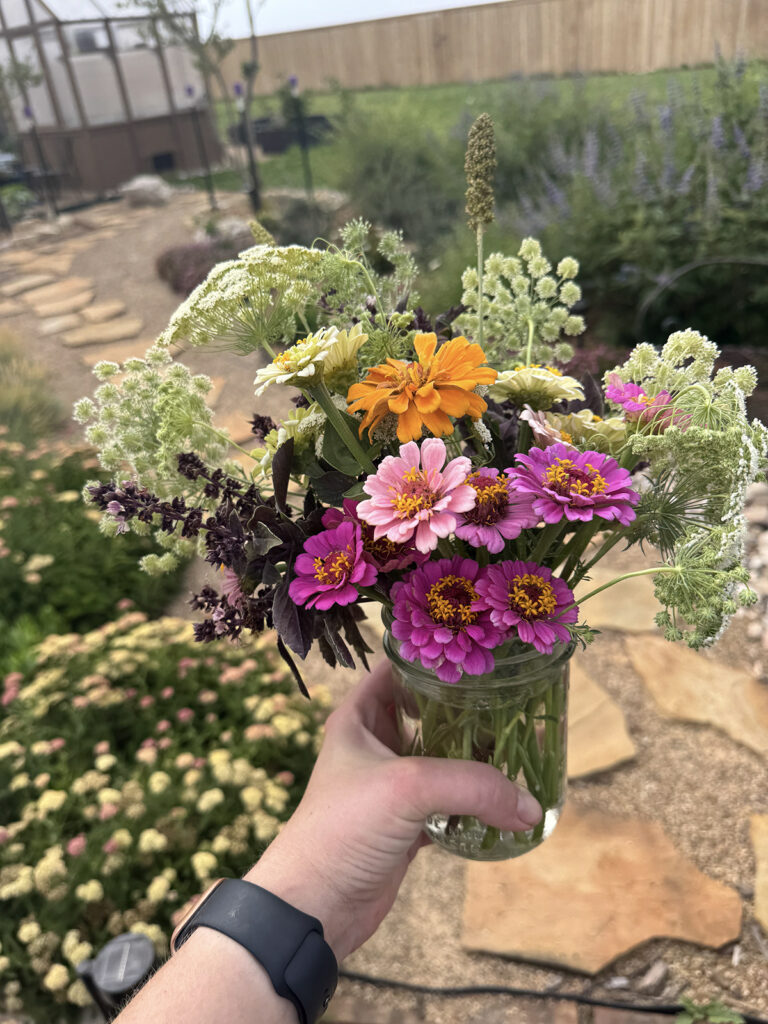
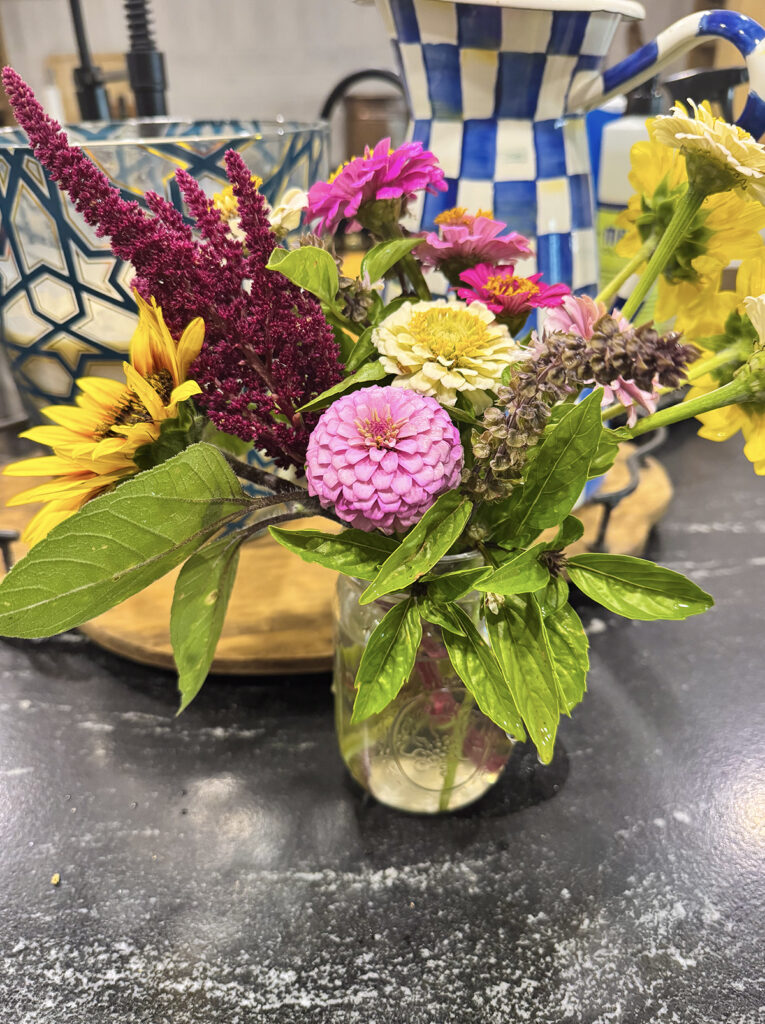
I’ve been known to put all kinds of herbs into my flower arrangements, but basil is one of the easiest to grow and works beautifully as both greenery and a structural bloom.
Much like zinnias, pinching it back encourages more growth. Leave a few seed heads at the end of summer and it’ll self-seed for next season, too.
Amaranth
When I first bought red garnet amaranth seeds and Russell realized they were related to pigweed—one of his worst weeds on the farm—he definitely thought I was crazy to plant them.
They’ve reseeded and spread some, but haven’t been nearly as aggressive as their pigweed cousin. Instead, they add really lovely color and texture to both the garden and my arrangements. Mine were slower to sprout this year, and I genuinely missed the structure they usually bring to the garden bed.
White Dill
With large, airy white blooms, white dill is a great filler in an arrangement.
The day after I planted it for the first time, I read another blogger’s horror story about how hard it was to get rid of. I was immediately nervous about what I’d done to my brand-new flower beds.
Three years later, mine haven’t spread aggressively at all. They reseed moderately and have even offered year-round greenery through our warmer winters. For my garden here in Texas, it’s a winner.
My Favorite Trick for Easy Flower Gardening
Just leave them alone. Really.
I let everything go to seed at the end of summer and sit over winter (which protects and nourishes the soil too!) — then wait and see what comes back on its own, filling in the gaps in spring if needed. Every year, the garden looks a little bit different, a little wild, with flowers to cut all summer — and significantly less work than it looks like.